


So, you’ve probably seen that tie—the one that has a mind of its own, dangling in weird directions in a bleak cubicle world. Yep, that’s Dilbert. And the guy who brought that offbeat, sarcastic, yet painfully relatable comic strip to life? None other than Scott Adams.
Now, depending on when you first encountered his work, your opinion of Adams might lean anywhere from “comic genius” to “wait… did he just say what on Twitter?” He’s been many things over the years: cartoonist, author, entrepreneur, and, let’s not sugarcoat it, a bit of a lightning rod for controversy. But love him or loathe him, Scott Adams is one of those cultural figures who’s managed to stay in the spotlight for decades—and not just because of a doodle of a man in a tie.
So let’s dive in, shall we? Grab a coffee (or whatever fuels your brain) and let’s unravel the story of Scott Adams, complete with comics, controversies, career pivots, and yes—even a little bit of conspiracy.
From Humble Beginnings: The Making of a Cartoonist

Scott Adams didn’t exactly pop out of the womb wielding a pen and satirizing the soul-sucking nature of corporate life. He was born on June 8, 1957, in Windham, New York—a small town that probably didn’t scream “future home of a world-famous cartoonist.”
Growing up, Adams was just your average kid with an interest in comics. He adored Peanuts by Charles Schulz and even won a drawing contest at age 11. That win sparked something. It wasn’t like he declared, “I shall become the next great satirist of office culture!” But, ya know, seeds were planted.
He went on to earn a degree in economics from Hartwick College and later snagged an MBA from the University of California, Berkeley. The guy was bright. But instead of heading straight for creative glory, Adams did what many of us do—he joined the 9-to-5 grind.
And that’s where the magic (or misery?) began.
The Corporate World: Fuel for Satire
Picture this: a cubicle, fluorescent lights, a boss named something like “Lumbergh” (okay, wrong reference, but you get the idea), and endless memos. That was Adams’ life for over a decade. He worked at companies like Crocker National Bank and Pacific Bell, doing everything from finance to tech writing.
And guess what? He hated it. Or maybe not hated—but it definitely wore him down. Which, ironically, was great for the rest of us. Because all that frustration turned into comedic gold.
He started drawing Dilbert in his spare time, basing the characters on real people he worked with—well, loosely based. The Pointy-Haired Boss, for instance, might’ve been inspired by a manager who once asked if Adams could “build a data center on the roof” (true story).
He mailed samples to a bunch of syndicates (this was the pre-Instagram era, remember), and in 1989, United Media took a chance on him. The comic debuted in just 40 newspapers.
But hoo boy, things were about to take off.
Dilbert: A Cubicle Icon is Born
By the mid-90s, Dilbert had become a full-blown phenomenon. And why wouldn’t it? It nailed the ridiculousness of office life in a way no other comic had done before. Micromanaging bosses? Check. Meaningless meetings? Oh yeah. Buzzwords like “synergy” and “core competencies”? All there, baby.
People didn’t just laugh at Dilbert—they felt it. It was like Adams was secretly sitting behind you at your last team meeting, jotting down everything that made you roll your eyes.
And you know what’s wild? This was before memes. Before Slack or remote work or viral Twitter threads. Dilbert was the OG workplace humor. It was printed out and pinned on cubicle walls like tiny protest signs.
By the late 90s, Dilbert was syndicated in over 2,000 newspapers worldwide. Adams quit his day job in 1995, which—honestly—felt like poetic justice. He escaped the very system he spent years mocking.
Beyond the Comic Strip: Books, TV Shows, and… Philosophy?
Now here’s where things get a little unexpected. Scott Adams didn’t just stop at comics. He wrote books. Lots of ’em. Some were Dilbert-themed, like The Dilbert Principle—which hilariously argued that companies tend to systematically promote the least competent employees to management (ouch, but also… true?).
But Adams also ventured into self-help territory. Ever heard of How to Fail at Almost Everything and Still Win Big? It’s kind of like if Tony Robbins had a sarcastic younger cousin who doodled in the margins. The book actually offered some solid advice, like focusing on systems over goals and maximizing personal energy.
He even dipped his toe into animation with The Dilbert TV Show on UPN in the late ’90s. It ran for two seasons and had a bit of a cult following. It was quirky, clever, and just the right amount of absurd.
And here’s a twist you might not expect: Adams has also dabbled in hypnosis, persuasion theory, and even politics. Like, a lot.
Wait, Politics? Yep, Buckle Up
Here’s where things get spicy—and honestly, a bit messy.
Around 2015, Adams started blogging about persuasion. Like, a lot. He was particularly fascinated with Donald Trump’s communication style, calling him a “Master Persuader.” That didn’t sit well with everyone.
Now, to be fair, Adams insisted he wasn’t endorsing Trump so much as analyzing him. But let’s just say nuance doesn’t always survive the internet’s hot-take machine. He started attracting more attention for his political commentary than for his comics.
And then there was the Twitter era. Oh boy.
Adams leaned into controversy, sharing opinions on race, gender, freedom of speech—you name it. Some of his takes were, uh, let’s say “bold.” Others… well, they landed him in some real hot water.
In 2023, after making remarks that were widely condemned as racist, several newspapers dropped Dilbert entirely. Adams defended his comments as being taken out of context—but the damage was done.
It was a stunning fall from grace for someone who’d once been a staple of daily comic pages.
The Complexity of Scott Adams: Genius or Provocateur?
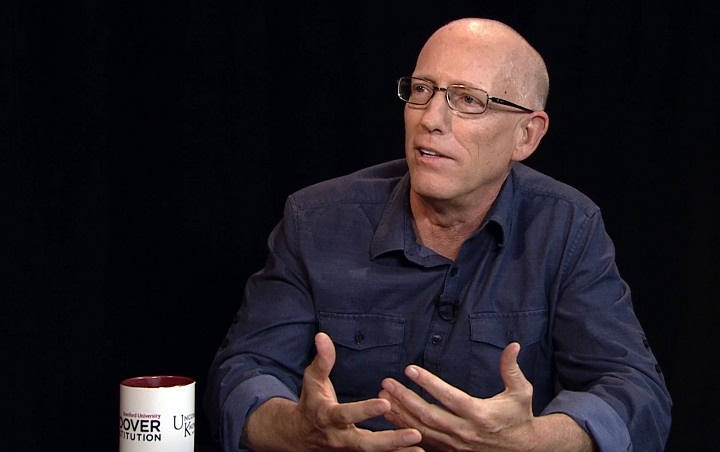
So what do we make of all this?
Is Scott Adams a brilliant satirist who turned office frustration into a cultural touchstone? Absolutely. Is he also a provocateur who sometimes crosses the line and then debates the definition of that line? Also yes.
There’s no denying that the man is sharp. He’s got this unique way of spotting the absurd in everyday situations, and that’s no small talent. But he also seems to relish stirring the pot, even if it means alienating half his audience.
Some call him fearless. Others call him reckless. Maybe he’s a bit of both?
Personally, I think Adams is a case study in the weird collision of art, internet culture, and personal branding. He started out drawing cubicles and ended up in culture wars. And while that might not have been his plan, it’s definitely made for a fascinating ride.
The Legacy of Dilbert (and Its Creator)
Even if Scott Adams disappeared from the public eye tomorrow (which doesn’t seem likely), his influence would stick around.
Dilbert changed how we joke about work. It gave frustrated employees a voice—albeit a cartoon one. It made it okay to laugh at the fact that yes, your company really did hire a consultant to tell you what you already knew.
And for all the drama, Adams deserves credit for building something that resonated with millions. He didn’t just create a comic—he created a mirror. One that reflected back the absurdity of office life with just the right amount of snark.
Whether you still clip out Dilbert cartoons or cringe at his latest post, there’s no denying: Scott Adams left a mark.
So, Where’s He Now?
As of this writing, Adams remains active online, still sharing opinions, podcasts, and the occasional cartoon. He self-publishes now—no longer bound by syndicates or editors. And that’s probably exactly how he likes it.
He’s sort of become a one-man media outlet, churning out content on his own terms. Unfiltered. Unapologetic. Sometimes brilliant. Sometimes baffling.
And honestly? That kinda sums up Scott Adams.
Here’s the million-dollar question, right?
Can we still enjoy Dilbert even if we don’t agree with Adams’ views? Can we laugh at the absurdity of corporate life without giving a pass to controversy?
There’s no easy answer. Some folks draw a hard line. Others say, “Hey, the comic helped me survive my soul-sucking job—so yeah, I’ll still smile when I see it.”
Me? I think both things can be true. Scott Adams created something that mattered to a lot of people. And he’s also made choices that… well, made a lot of folks uncomfortable.
At the end of the day, he’s a reminder that creators are complex, messy, flawed, and occasionally brilliant human beings. Just like the rest of us.